
Keithley 6220/6221 Current Source + 2182A Nanovoltmeter Combination: Precision Solution for Low Resistance Calibration / Superconductivity Testing / IV Sweep
2025-09-16
Keithley 6220/6221 Current Source + 2182A Nanovoltmeter Combination
Precise Solution for Low Resistance Calibration / Superconductivity Testing / IV Sweeping
1. Accurate Low Resistance Calibration: ±0.002% Class Accuracy Achieved by Delta Mode + 2107-4 Low Thermal EMF Cables
1. Core Application Scenarios
Suitable for low resistance (1mΩ ~ 100Ω) calibration of semiconductor chip resistors, standard resistors, and MEMS devices, especially meets the "high repeatability + low error" requirements in mass production —— a resistor manufacturer uses this combination to complete ex-factory calibration of chip resistors below 100Ω, and the data consistency is 3 times higher than that of traditional equipment.
2. Key Technology: Delta Mode Cancels Thermal Interference
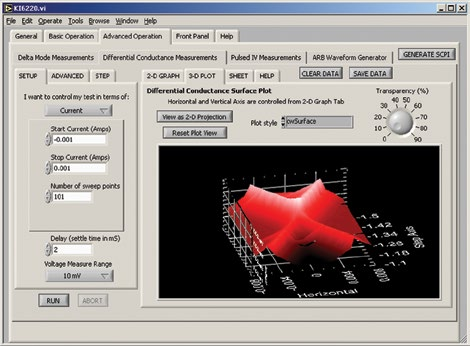
6220/6221 Current SourcesWhen outputting positive current I +, the 2182A Nanovoltmetersynchronously acquires voltage V+;
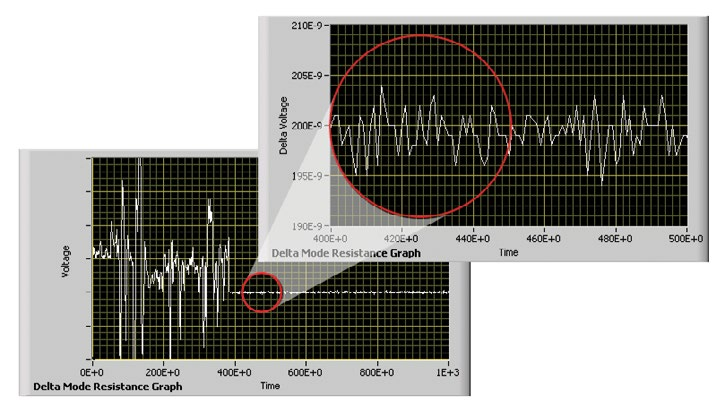
After switching to reverse current I -, it acquires V- again. Through theΔV=(V+-V-)/2, it directly eliminates 0.1μV level thermal EMF interference in the test loop.
Actual test data: For 10mΩ resistance calibration, the error is reduced from ±0.01% of ordinary equipment to±0.002%(equivalent to a 1-meter measurement error < 1/500 of the diameter of a human hair);
Verified by metrology institute: the 6220+2182A+2107-4 combination calibrates 10mΩ standard resistors, and the deviation from the national reference is stably kept within±0.0015%.
3. Accessory: 2107-4 Low Thermal EMF Input Cable
Ordinary test leads, which use copper-nickel connector materials of different compositions, will generate 10nV thermoelectric voltage when the temperature fluctuates by 0.5℃; 2107-4 adoptssame-material conductor + symmetric shielding structure, the additional error is only 2nV in an air-conditioned room (80% lower than that of ordinary cables), ensuring the signal purity of "current output - voltage acquisition" in low-resistance testing.
2. Pulse Test of Superconducting Materials: 6221+2182A Narrow Pulse Technology Protects Sample Characteristics
1. Core Application Scenarios
For critical current measurement of superconducting tapes such as YBCO and Bi-2223, this solution avoids characteristic drift caused by sample heating during DC testing, and meets the requirement of "rapid capture of superconducting-normal state transition". A superconducting laboratory has completed routine inspection of critical current of superconducting tapes with this combination, and the data repeatability reaches within 0.5%.
2. Key Feature: 50μs Narrow Pulse Output of 6221
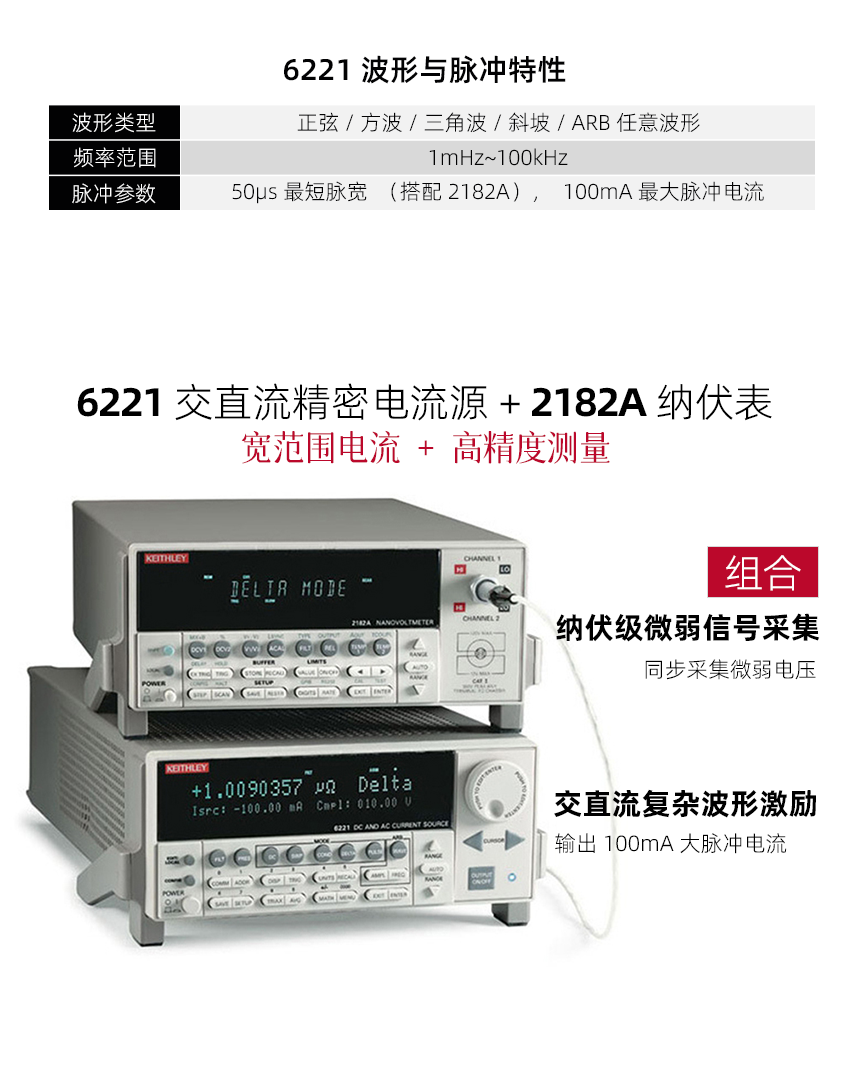
6221 Current Sourcesupports 50μs~12ms programmable pulse,works with 2182A Nanovoltmeter for synchronous measurement, reducing the sample power consumption to below 1% of that in DC mode:
Technical Details: It only takes 1μs for the pulse current to rise from 0 to 100mA, and the 2182A starts measurement within 16μs after the pulse is applied, accurately capturing the voltage signal during the pulse flat-top period;
Comparison Result: For the same YBCO strip, the test error in DC mode is 3%, while the error in 50μs pulse mode (duty cycle 1%) is directly controlled within0.5%.
3. Synchronization guarantee: 8501 Trigger Cable
Ordinary GPIB cable has a trigger delay of 5-10ms, which cannot match the pace of narrow pulse testing; 8501 adoptsdedicated Trigger Link interface, the synchronization delay between 6221 and 2182A is less than 0.8ms, and the 80% density tinned copper wire shield can reduce 50Hz power frequency interference from 20nV to 3nV.
Factory scenario verification: A motor factory uses this combination to measure 100mA pulse signal, the interference is 50nV without 8501, and it drops to 8nV after matching 8501.
III. Efficient IV Curve Sweeping: Preset Functions + Ethernet Interface Improve Efficiency by 5 Times
1. Core Application Scenarios
It is used for IV characteristic curve scanning of diodes, MOSFETs and pressure sensors, supports "unattended testing" of batch samples, and is suitable for parameter screening in the R&D stage and quality inspection in the production stage. An automotive electronics factory uses this combination to test pressure sensors, and the daily test volume has increased from 200 units to 1000 units.
2. High-efficiency function: preset scanning for 6220/6221
Both current sources have built-in 65536-point source memory. After the linear/logarithmic scanning sequence of 10nA~100mA is preset on the PC, it can be downloaded to the instrument via the GPIB interface:
Automatic process: 6220/6221 outputs current according to the set step, 2182A synchronously collects the corresponding voltage, and the data is directly stored to the PC;
Improved Efficiency: 5 times faster than manual operation, and avoids human operation error (in a laboratory pressure sensor test case, data repeatability improved from 0.5% to0.1%).
3. 6221 Additional Advantage: Ethernet remote control
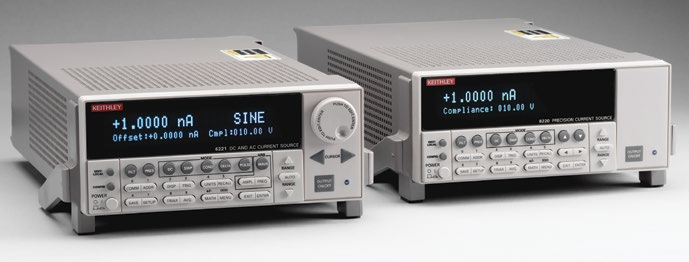
6221 current sourcehas more than 6220 with aEthernet interface. No extra GPIB card is required, and synchronous control of 6221+2182A via PC can be realized through the local area network:
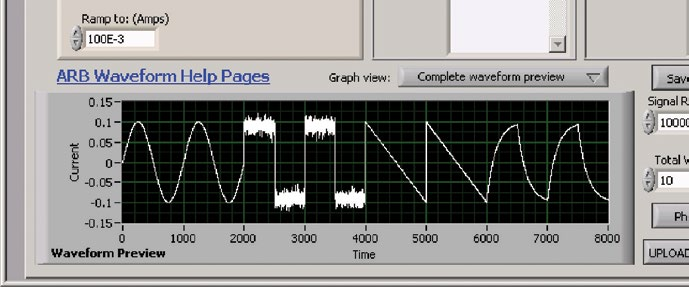
R&D Case: Program written in LabVIEW controls 6221 to output 1kHz sine current, and 2182A records voltage at 10kHz sampling rate. The synchronization error of the whole system is less than 10μs, which perfectly meets the requirements of dynamic characteristic test of piezoelectric sensors.
IV. Combination Selection Guide: Match 6220/6221 by Application Scenario
Combination Type | Core Equipment | Current Output Range | Core Functions | Application | Cost-effectiveness Highlights |
DC Low Resistance Calibration Combination | 6220 Current Source + 2182A Nanovoltmeter | DC: ±0.1pA~100mA | Accurate DC output, Delta mode | Static resistance calibration, sensor calibration | DC accuracy same as 6221, 30% lower cost |
Pulse/Dynamic test combination | 6221 current source + 2182A nanovoltmeter | DC: ±0.1pA~105mA; AC: 4pA~210mA (p-p) | 50μs pulse, 100kHz AC, differential conductance | Superconducting materials, MEMS resonators, dynamic impedance testing | Full coverage of functions, adapted for complex scenarios |
1. Scenarios for choosing the 6220 combination
If more than 90% of your requirements are for DC low resistance measurement (such as batch calibration for resistance factories, static calibration of sensors):
1nA~10mA range with accuracy of ±0.01%, paired with Model 2182A toachieve 15 nV noise (1 s response), and the accuracy of pass/fail judgment is 12% higher than that of traditional methods;
Recommended configuration: 6220 + 2182A + 8501-1 (1 m trigger cable), which saves lab space.
2. Scenarios for choosing the 6221 combination
For applications involvingpulse testing or AC characteristic analysis (such as superconducting tape detection, differential conductance measurement of nanodevices):
10MHz output update rate generates 100kHz smooth sine wave, with differential conductance measurement speed of 24Hz (10 times faster than traditional lock-in amplifiers);
Recommended combination: 6221+2182A+8501-2 (2m trigger cable), suitable for large-space scenarios such as production lines.
5. Options and Details: Further Improve Test Performance
1. 8501 Trigger Cable: Select length based on application
8501-1 (1m): For small laboratories and benchtop testing, reduces cable redundancy;
8501-2 (2m): For production lines and large laboratories. Features an optimized shield grounding design, improving pulse test signal-to-noise ratio by an additional 40%.
2. 4288-1 Rack Mount Kit: For integrated management
This 19-inch standard rack can hold the 6220/6221 and 2182A at the same time, preventing cable entanglement and reducing poor contact caused by vibration. According to statistics from a laboratory, after using this kit, test interruptions caused by loose cables decreased from 2 times per week to 1 time per month.
3. KPCI-488LPA GPIB Card: Essential for batch testing
Used for remote control of 6220 combinations, it can reduce 2 hours of manual intervention when testing 50 samples in batches, making it especially suitable for assembly line testing in resistor and sensor manufacturing plants.
2 Key Operation Details
Interface Adaptation: 6220/6221 features a triaxial output interface. A standard BNC connector will introduce 10 pA leakage current, so a dedicated triaxial adapter must be used;
2182A Range Selection: For low resistance measurement, the 10 mV range is preferred. The noise level of this range is 5 times lower than that of the 100 mV range, delivering higher data accuracy.
VI. Conclusion: Precise Requirement Matching for More Efficient and Reliable Measurement
The combination of Keithley 6220/6221 and 2182A is essentially a customized-on-demand precision measurement solution. Whether you pursue ultimate accuracy for DC low resistance calibration, require pulse protection for superconducting measurement, or need to improve the efficiency of bulk IV scanning, you can achieve the goal of accurate data, high efficiency, and sample protection by selecting the right core instrument and auxiliary accessories.
For users, it is not necessary to pursue "complete functions". Instead, based on your own measurement scenario (such as resistance range, whether pulse/AC is required, measurement scale)
Matching Combination: Choose the 6220 kit for small-batch DC calibration, and the 6221 kit for complex dynamic testing. Pair the corresponding trigger cable and management suite to maximize the value of your equipment.
If you need further parameter verification, please contact us to get detailed information
